

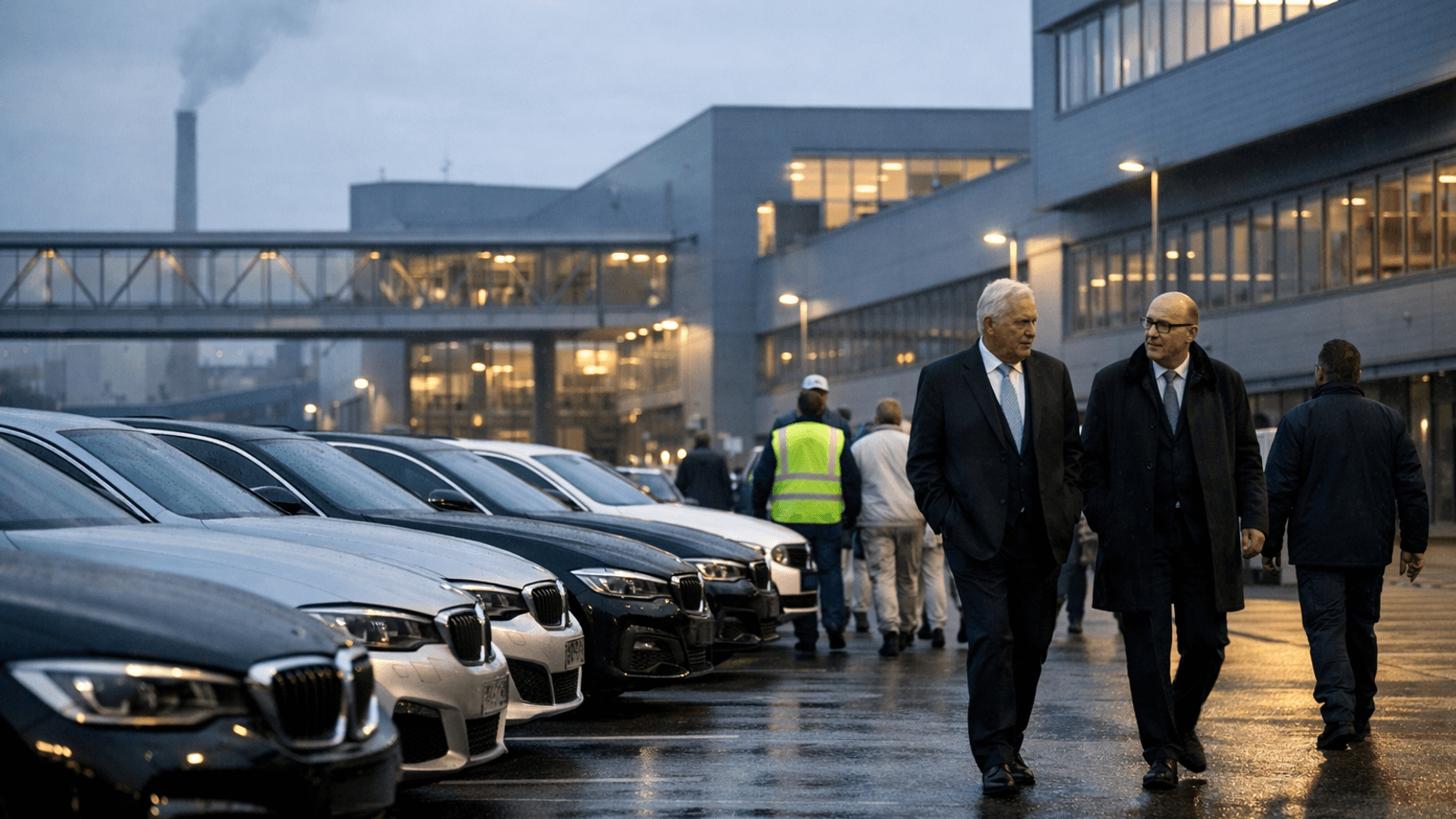
Germany’s car industry is entering 2026 under heavy pressure. Volkswagen and BMW have both reported weaker annual results, underlining how trade barriers, slowing demand in China and rising competitive pressure are squeezing even the country’s biggest manufacturers.
Volkswagen posted 2025 sales revenue of about 321.9 billion euros, roughly flat from a year earlier, but its operating result fell 53% to 8.9 billion euros. The group said profitability was hit by U.S. tariffs, weak conditions in China and a sharp deterioration at Porsche, while Audi also came under pressure.
The company expects only limited improvement this year, guiding for sales growth of between 0% and 3% and an operating return on sales of 4% to 5.5%. Volkswagen is also pushing ahead with a sweeping restructuring program, including major job cuts in Germany by 2030, as management tries to restore margins and adapt to a tougher global market.
BMW remains more resilient than several rivals, but it too struck a cautious tone. The Munich-based carmaker said 2025 group earnings before tax came in at just over 10.2 billion euros, while revenue fell to 133.5 billion euros. In its core automotive division, margins narrowed as tariffs and intense competition, especially in China, weighed on performance.
For 2026, BMW expects another moderate decline in earnings and flat vehicle deliveries. Together, the results from Volkswagen and BMW show how deeply the German auto sector is being tested as it navigates weaker Chinese demand, costly geopolitical disruption and an uneven transition to electric mobility.