

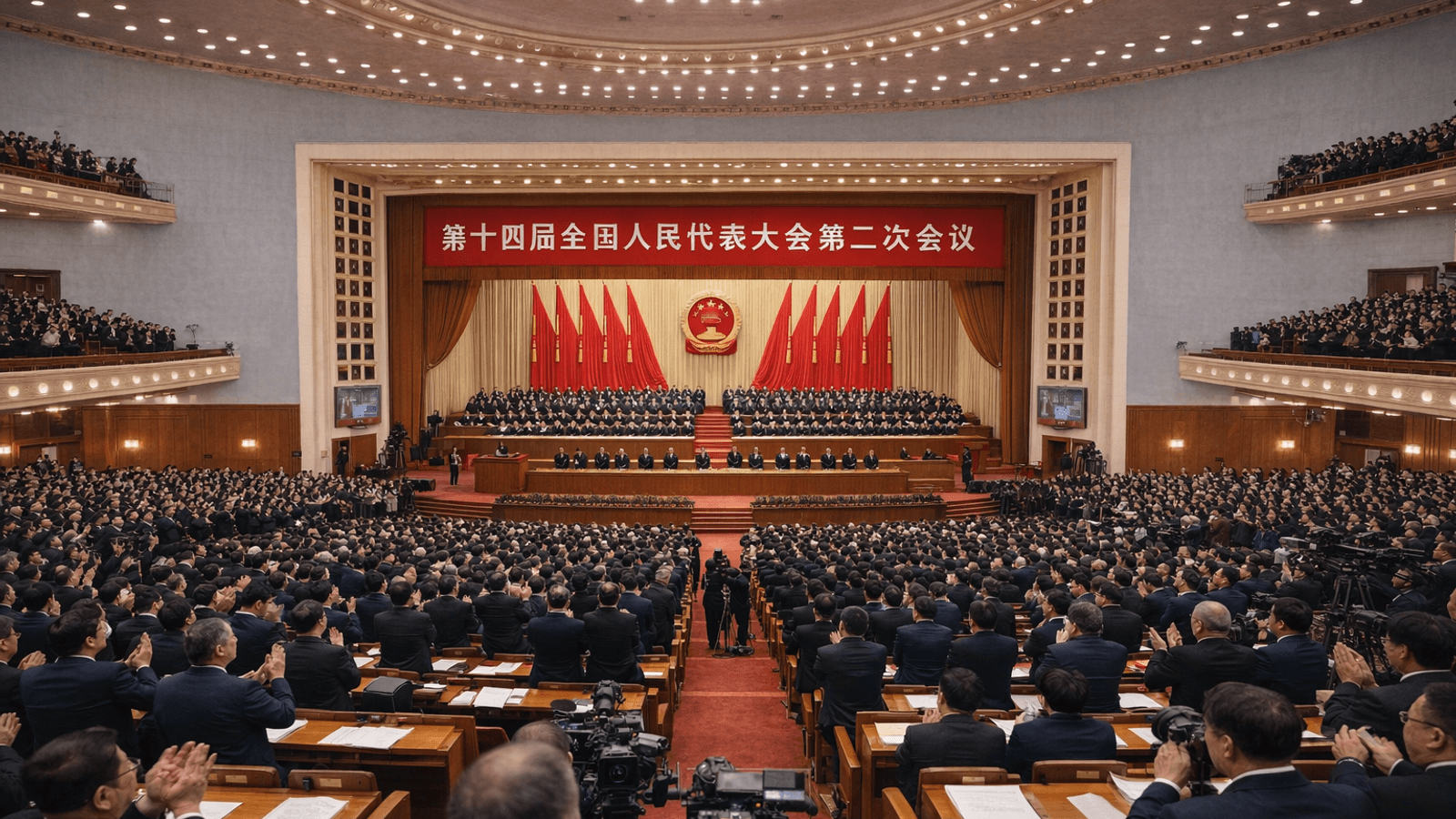
China has used the closing of its annual National People’s Congress to lock in a new five-year blueprint that underlines how central industrial policy has become to the country’s economic strategy. Official documents approved in Beijing set out the 2026-2030 plan as a framework for high-quality development, with innovation, advanced manufacturing, public welfare and green transition all presented as core priorities.
The signal for foreign competitors is clear. Chinese leaders are again tying national growth to technological upgrading, stronger domestic supply chains and a bigger push into strategic sectors such as semiconductors, artificial intelligence and other high-value industries. German reporting on the plan has described it as a warning of tougher competition for Europe, especially in sectors where Chinese companies are already moving rapidly up the value chain.
At the same time, Beijing is trying to balance long-term ambition with a weaker and more uncertain economic backdrop. Official reporting around the congress has stressed employment, living standards and social stability alongside innovation, suggesting the leadership wants industrial modernization without allowing labour-market strains or sluggish consumption to become political liabilities.
That makes the new plan more than a technocratic exercise. It is a statement that China intends to keep using scale, state coordination and targeted investment to shape the next phase of global competition. For European companies and policymakers, the question is no longer whether Beijing will double down on this model, but how quickly rivals can respond.