

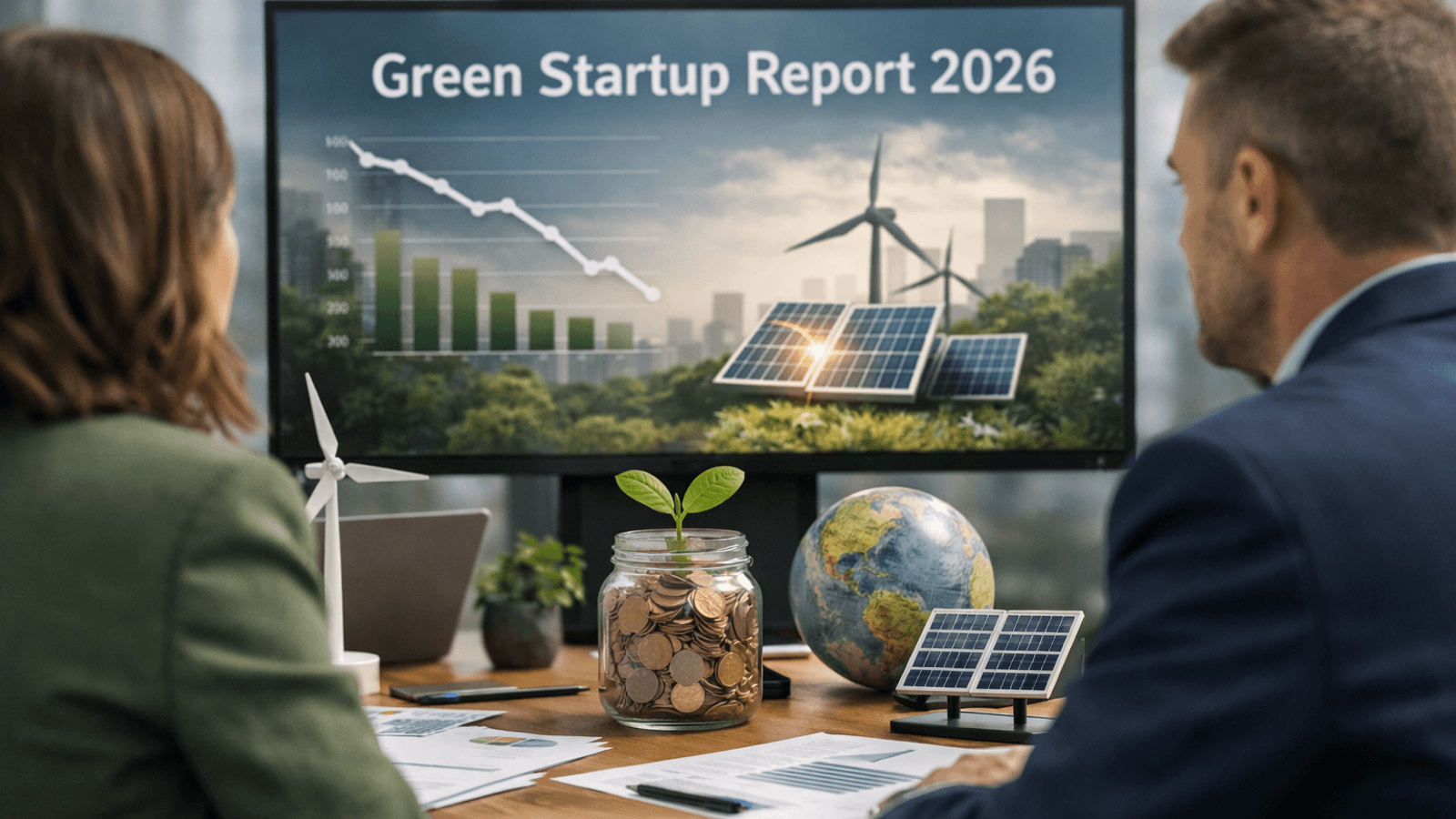
Germany’s green startup sector continued to expand over the past decade, even as the pace of new company formation weakened in the last two years, according to the Green Startup Report 2026 from the Borderstep Institute.
The study says 4,668 green startups were founded between 2016 and 2025, reflecting a six percent increase in the overall size of the sector over ten years. These companies are building businesses across renewable energy, circular economy, climate-neutral production, sustainable mobility, resource efficiency and environmental technology.
The report argues that green startups remain a key source of innovation for climate protection and industrial transformation, but says founding momentum has softened despite growing markets for greentech solutions. The authors link the slowdown not to weaker demand, but to shifting political and public attention toward areas such as artificial intelligence and security, which has influenced funding and investment priorities.
Borderstep also highlights the high innovation intensity of the sector. It says 35 percent of venture-backed green startups hold at least one patent, compared with roughly 14 percent across similar startups in Europe, underscoring the research-driven nature of many climate tech ventures.
The report also points to measurable climate impact and somewhat stronger female representation in leadership. According to the study, green startups reduce greenhouse gas emissions by more than 70 percent on average versus conventional technologies, while women held 22 percent of management roles in green startups founded in 2025, compared with 16 percent at non-green startups. The authors say clearer policy conditions will be needed to support investment and revive formation momentum in capital-intensive greentech fields.