

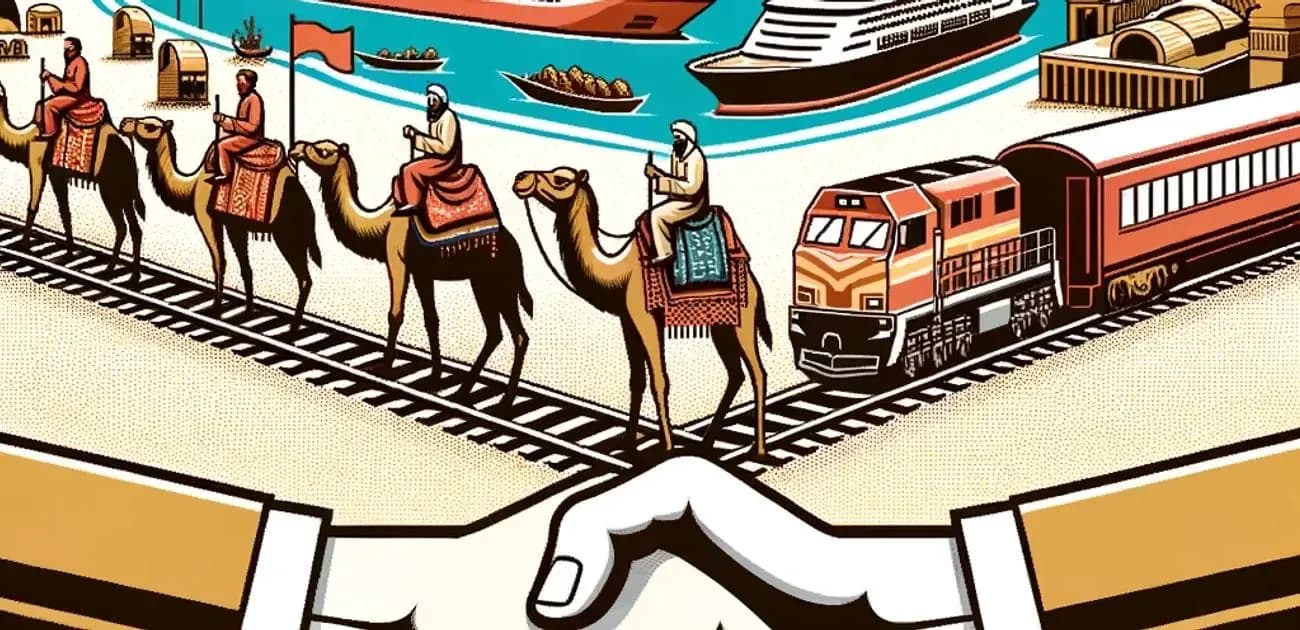
China’s ambitious Belt and Road Initiative, designed to position the country at the center of a vast intercontinental trade and infrastructure network, is facing growing resistance. While the Silk Road summit in Beijing has been the country’s most prominent diplomatic event of the year, critical voices from Europe and the Global South are becoming harder to ignore.
Since the launch of the initiative in 2013, more than 150 countries and 32 international organizations have pledged support, with investments totaling around one trillion US dollars, mainly across Africa, Central Asia, and Southeast Asia. But recent developments suggest rising hesitation. Italy, the only G7 country to join the initiative in 2019, is moving away from it, and most EU heads of government were absent from the current summit.
Criticism is not limited to Europe. Countries in Asia and Africa have also raised concerns. Problems repaying loans, delays to Belt and Road projects caused by the coronavirus pandemic, and accusations that China has created debt traps have all weakened confidence in the initiative. Critics also argue that many projects failed to deliver the promised jobs, while China itself has reduced its lending activity.
Despite these challenges, China continues to highlight what it sees as the Belt and Road Initiative’s major successes, including expanded ports in Pakistan and Sri Lanka and new railway connections in Indonesia and China. In a recently published white paper, Chinese leaders emphasized the initiative’s benefits for the Global South and called for a fairer distribution of global economic development.